Non-surgical spinal decompression · Bethesda, MD
Back, neck or leg pain that has not gone away after therapy, medication or injections?

From patients
A. Cunningham
Google review
Moti K.
Google review
Nebiat F.
Google review
Why the pain keeps coming back
Everything you tried treated the pain. Nothing treated the disc.
You rested. You did physical therapy. You tried adjustments, medication, maybe an injection. Each one calmed the pain for a while. Then it came back.
A damaged disc has very little blood supply, so it changes slowly. One treatment does not change it. That is why the pain keeps coming back.
Whether non-surgical decompression can work for you depends on your disc, your symptoms and what Dr. Lee finds when she evaluates you. That is what the evaluation is for: a clear answer on whether non-surgical decompression makes sense for you, and what to do if it does not.
Prime Spine patient
Google review
How non-surgical decompression works
Gentle, computer-controlled treatment for the disc itself.
1
Evaluation with Dr. Lee
Your history, a full physical exam with a muscle and nerve function assessment, and your MRI or X-rays. You find out whether you are a candidate.
2
A plan built for your spine
Your program is built around everything Dr. Lee finds in her evaluation, and around your goals.
3
Care, with progress checked
Dr. Lee re-examines you at set points and adjusts the plan.
How it compares
Why the pain comes back, and what is different here.
Rest and medication
Quiets the pain signal
Rest lets a flare-up settle, and medication dulls the pain while it is in your system.
Neither one takes the pressure off the disc, so the pain returns once you are back to your normal day.
- Short-term relief. The disc is unchanged
Physical therapy
Strengthens the muscles around the spine
Good therapy builds support and gets you moving again, and it helps many people.
It works on the muscles around the disc, not the disc itself. When a nerve is irritated, the exercises can be hard to do.
- Helpful support. The disc is unchanged
Adjustments on their own
Helps stiff joints move
An adjustment loosens the joints of the spine and can ease the pain for a while.
On its own, it does not take the pressure off a bulging or herniated disc, which is why Dr. Lee does not rely on adjustments alone.- Relief for a while. The disc is unchanged
Injections
Calms the inflamed nerve
A steroid injection near the nerve can quiet a bad flare-up of nerve pain.
The disc pressing on the nerve stays the same, and there is a limit to how many injections you can have.
- Temporary. The disc is unchanged
Non-surgical spinal decompression
Takes the pressure off the disc itself
- Aimed at the cause, so relief can last
- No needles, no drugs, no surgery
- Fully clothed, on a padded table
- Dr. Lee evaluates every case herself
- Program built from Dr. Lee’s full evaluation
- Progress re-examined by Dr. Lee
A patient story
Told nothing else could be done. Then non-surgical decompression.
The problem
Could not stand for more than 5 to 10 minutes
What she had tried
Pain pills, muscle relaxers, a nerve ablation
What changed
Standing upright, walking and moving much easier
Your doctor
Dr. Rebecca Lee does every evaluation herself.
- We only accept cases we are confident we can help.
- She has co-managed patients with neurosurgeons, orthopedic doctors and radiologists.
- An independent Bethesda practice, not a chain.
Conditions
Sound like you?
Low back pain
It keeps coming back, and sitting makes it worse.
Herniated or bulging disc
Your MRI found it. You were told to wait it out, get an injection, or think about surgery.
Sciatica
Pain or tingling that runs down one leg.
Neck pain and arm symptoms
Neck pain that reaches your shoulder, arm or hand.
Pinched nerve
Sharp, electric pain that follows a line into an arm or leg.
Spinal stenosis
Legs ache or go numb when you stand or walk, and sitting helps.
Common questions
Before you apply
Most people find a session comfortable, and some fall asleep. The pull is gentle and builds slowly. Tell the team at any point and the table is adjusted.
Getting here
In Bethesda, with free reserved parking.
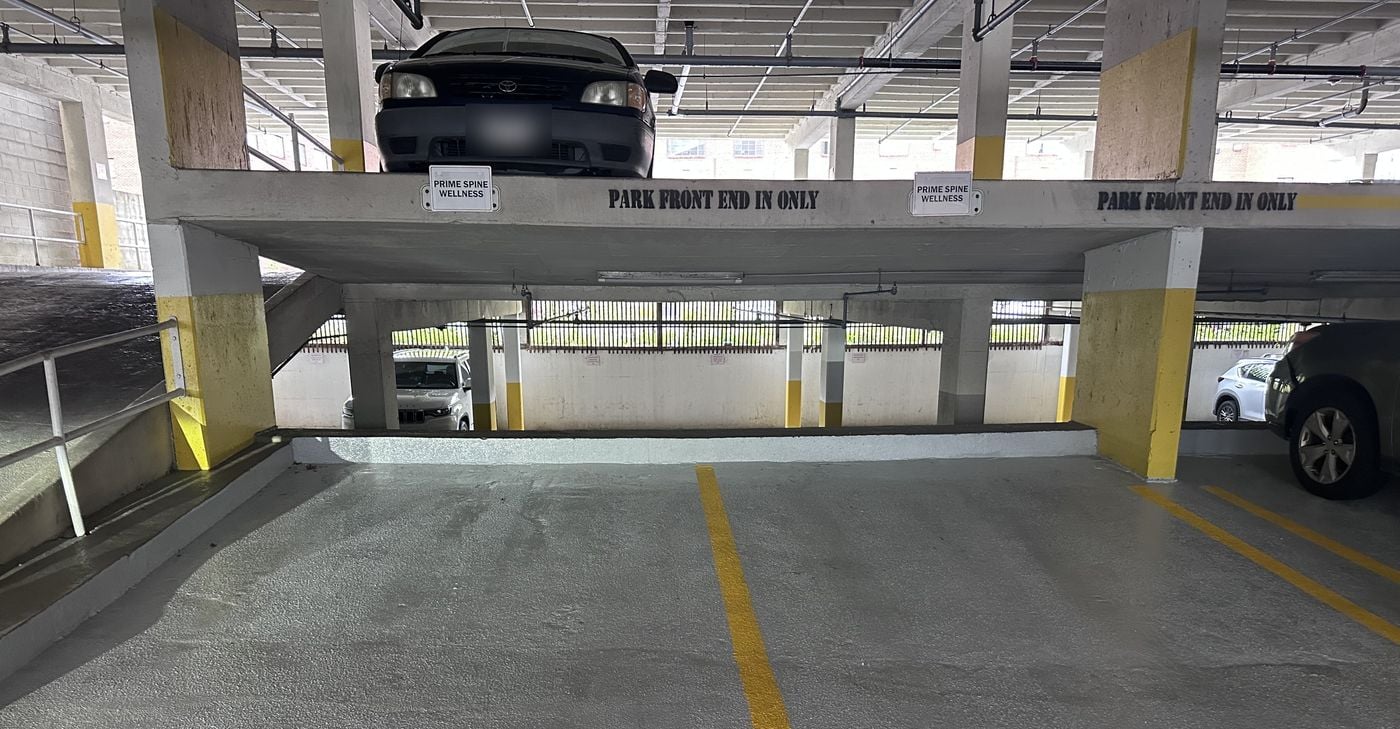
- Free reserved parking for patients on levels 1 and 2 of the garage attached to the building. Look for the Prime Spine Wellness signs.
- From the garage, walk down to the building’s front entrance
- Minutes from Bethesda, Chevy Chase, Potomac, North Bethesda and Northwest DC
Next steps
How booking works
1
Apply online
A short form about your symptoms, how long they have lasted, and what you have tried.
2
The office reviews your application
The office looks it over and contacts you about the next step, usually to schedule your evaluation.
3
Your evaluation
In the office with Dr. Lee. Bring your MRI or X-ray, or the report if you cannot get the images.
Epidural risks and alternatives
Had an epidural? Most of Dr. Lee’s patients have.
- Not FDA approved for sciatica, stenosis or disc problems
- Treats the pain, not the cause
- Repeated injections carry real risks
More from Dr. Lee: the research · articles and resources

Next step
Start with an evaluation.
Prime Spine Wellness
(301) 272-2050
4833 Rugby Avenue, Suite 402, Bethesda, MD 20814
EMAIL: PRIMESPINEWELLNESS@GMAIL.COM
Office Hours
- MON 11 AM – 2 PM and 3 – 6:30 PM
- TUES 11 AM – 2 PM and 3 – 6:30 PM
- WED 11 AM – 2 PM and 3 – 6:30 PM
- (Closed for lunch 2 – 3 PM)
- THURS 11 AM – 4:30 PM
- FRI 11 AM – 4:30 PM
- SAT and SUN CLOSED
- Free reserved parking on levels 1 and 2 of the attached garage. Look for the Prime Spine Wellness signs.